 Nintendo Switch
Reviewed platform: Nintendo Switch.
 Review
Jump to chapter

Open your eyes
Scroll to wake up The Legend of Zelda: Breath of the Wild review
The map does not exist to be cleared. It exists to be explored.
Nintendo Switch Nintendo Switch 2 EditionReview by Menino Neitam
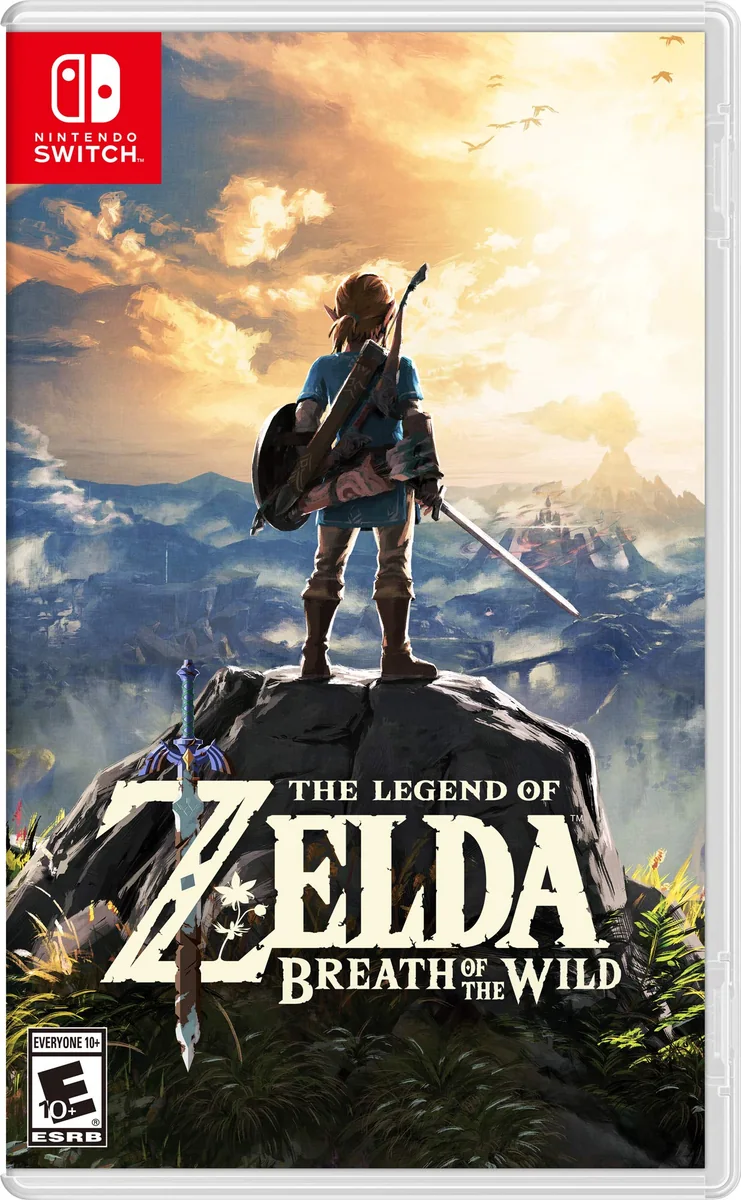
 Nintendo Switch
Reviewed platform: Nintendo Switch.
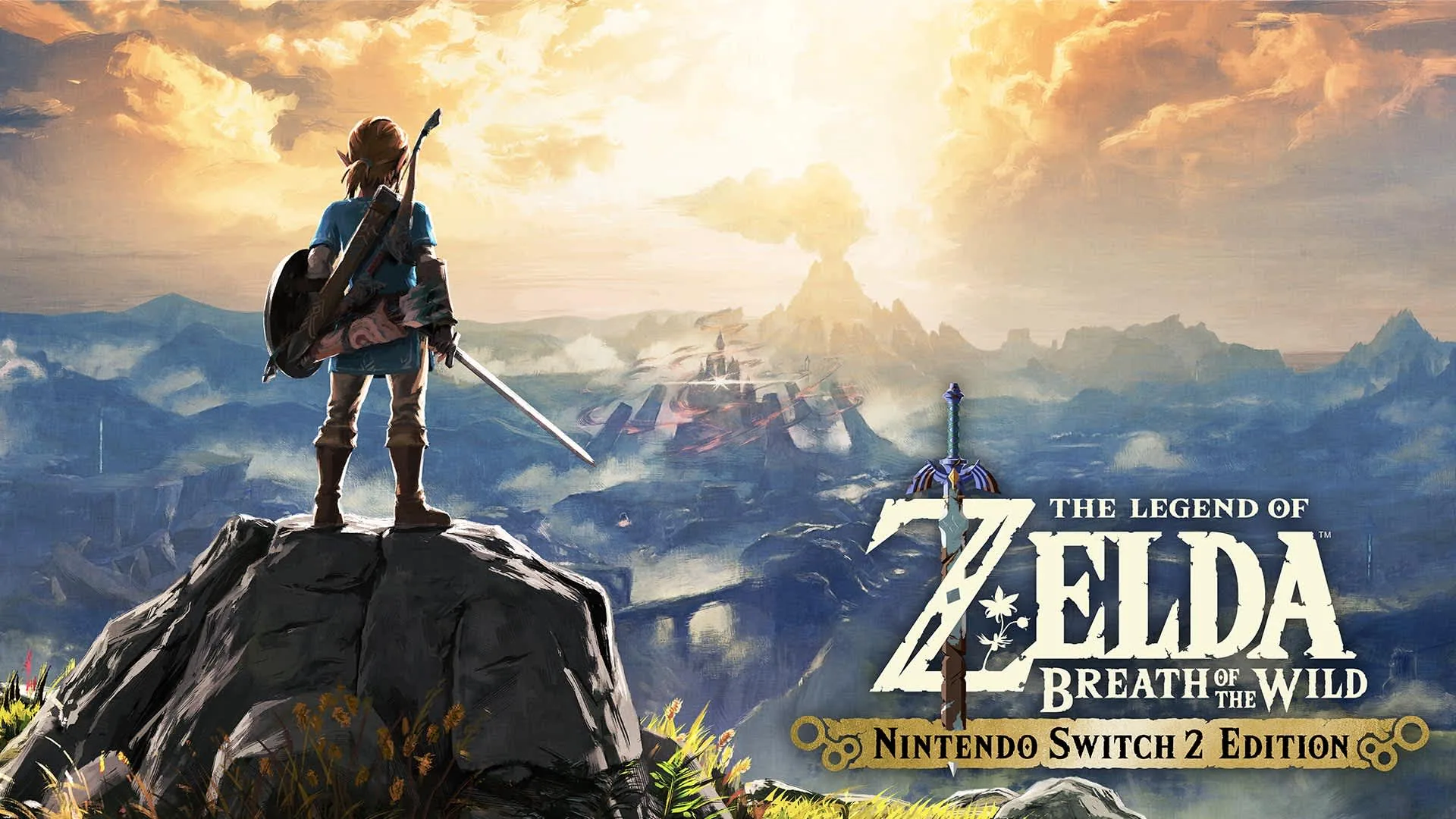
Nintendo Switch 2 EditionReviewed platform: Nintendo Switch 2.
Reviewed on both versions by Menino Neitam
Each shrine opens a chapter of this review. The ones you have visited light up in blue.
A hundred years later, Hyrule waits
There is something very strange about the first minutes of Breath of the Wild. Link wakes up with practically nothing, leaves an unknown structure and, shortly after, the game simply puts Hyrule in front of him. No endless sequence shows up telling you where to go. There is no line of characters holding your hand until you learn every system. There is a mountain, some ruins, enemies in the distance and a huge world apparently waiting to find out what your first decision will be. That was when I realized this Zelda was not interested in merely modernizing the series formula. Nintendo wanted to take it apart and find out which pieces really needed to keep existing.
The feeling of freedom shows up very early. After finishing the starting region and getting the tools you need, practically the whole kingdom is available. You can follow the main adventure, look for a village, climb a mountain that caught your eye or simply disappear in a random direction for hours. Some regions will probably end up killing Link quickly because the equipment is not good enough yet, but the game almost never says you cannot try. That difference between stopping the player and letting them discover their own limits defines a good part of the experience.
A kingdom that survived the calamity
Breath of the Wild has a Hyrule very different from the one found in several earlier entries. The kingdom has already lost its great battle. Link wakes up a hundred years after the calamity and finds a world that learned to keep existing among ruins, abandoned machines and small communities that survived the disaster. It is a beautiful setting, but there is a constant sadness in the landscape.
Sometimes you find the ruins of some building in the middle of a forest and there is nobody to explain in detail what happened there. The place is simply abandoned. Plants have grown around the walls, objects remain scattered and it is up to the player to imagine part of that story. That approach gives exploration a special weight.
Nintendo does not need to put an extraordinary chest on top of every mountain to justify the climb. Many times, getting up there and seeing a new region already works as the reward.
Drag to explore and zoom in to read the name of every tower, shrine and region.

Climb, glide and discover
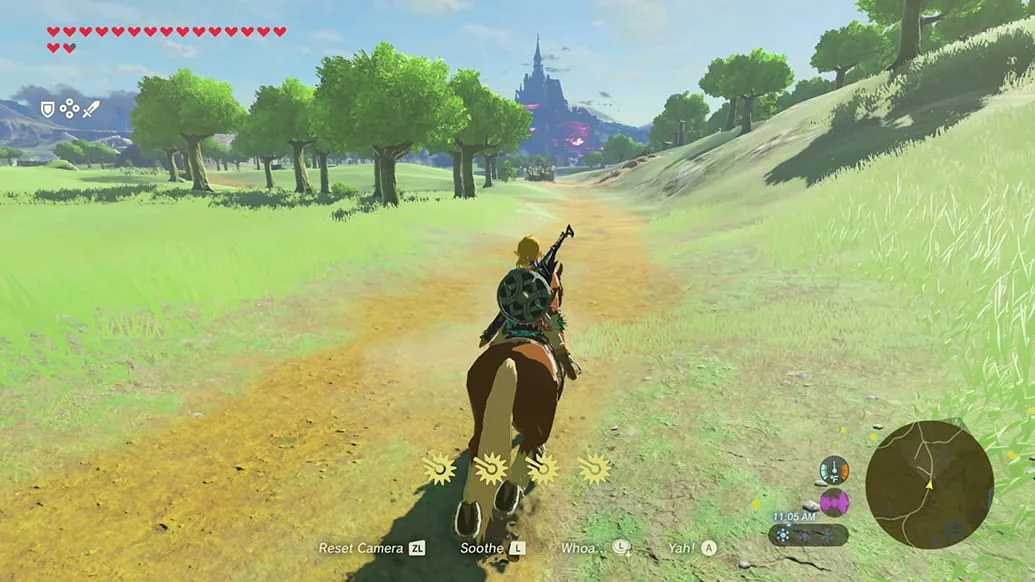
Climbing seems like a simple mechanic until you realize how much it changes the structure of an open world. Mountains stop being invisible walls. A huge building is not just decoration. A path drawn on the map can be ignored because there is a slope right next to it.
The main limitation is Link's stamina, and that choice is very smart. Instead of artificially deciding which walls can be climbed, the game asks whether you have enough energy to reach the top. That makes every stamina upgrade important not only in combat, but for exploration itself.
Over time, I started looking at the terrain and planning routes. Maybe it is possible to reach that part of the mountain directly. Maybe it is better to find a higher point and use the paraglider. Maybe there is a path I have not found yet.
The game constantly creates questions and almost never forces the player to answer them the same way.
Hyrule is not just a big backdrop. Temperature, rain, electricity, fire and other elements have real consequences. Entering an extremely cold region without proper clothing or food that can protect Link quickly becomes a problem. Hot areas require another kind of preparation. During storms, metal equipment can turn the hero into the worst possible place for lightning to strike.
These rules help sell the feeling that the world exists independently of the player. They also create some annoying situations. Climbing in the rain can be extremely frustrating, especially when you are almost at your destination and Link starts sliding down the wall. I will not pretend I found it fun every time.
At the same time, it is exactly this kind of inconvenience that gives the environment personality. Hyrule is not trying to make your journey easy.
Small trials, giant machines
The big traditional dungeons were reduced in number and largely replaced by dozens of Shrines spread across the map. They work as small independent challenges. Some test combat. Others are puzzles involving physics, bombs, magnetism, ice or object manipulation. There are also Shrines whose real difficulty is figuring out how to get into them.
Completing one of these places gives resources used to increase health or stamina and also unlocks a fast travel point. Because of that, even finding a Shrine when you do not plan to complete it right away is already useful.
The most interesting part is how these challenges break the journey into small discoveries. You can be crossing a region completely far from the main campaign, notice something strange in the landscape and end up spending twenty minutes trying to find out whether there is a Shrine hidden there.
Not all of them have the same quality, but the best ones are among my favorite puzzles of this era of Zelda.
The four Divine Beasts take on the role of the big main dungeons. There is a very good idea behind them. Each structure can be manipulated in some way, changing parts of the environment itself and altering the available paths. It is an interesting way to turn the entire dungeon into part of the puzzle.
The problem is that visually they share a very similar identity. That reduces a bit of the anticipation the old Zeldas created when you finally reached a new big dungeon and had no idea what you would find inside. They are also relatively compact.
I do not consider the Divine Beasts bad. On the contrary, some have excellent puzzles. But it is one of the few elements where I missed the individual personality of the series' old temples.
Early tools, constant danger
Another big change is in progression. Traditionally, Zelda uses new equipment to open paths that were impossible before. Breath of the Wild breaks that logic by handing you early the main runes you will use throughout the whole adventure.
Bombs, magnetism, Stasis and Cryonis stay relevant because the game does not depend on simply having the right tool. The challenge is figuring out how to use it. That also leaves room for solutions that seem wrong and still work. It was one of the things I liked the most.
Sometimes I would solve a puzzle with the feeling that it was definitely not the solution the developers had in mind. But the game accepted it. Breath of the Wild seems to strongly believe that consistent rules are more interesting than single answers.
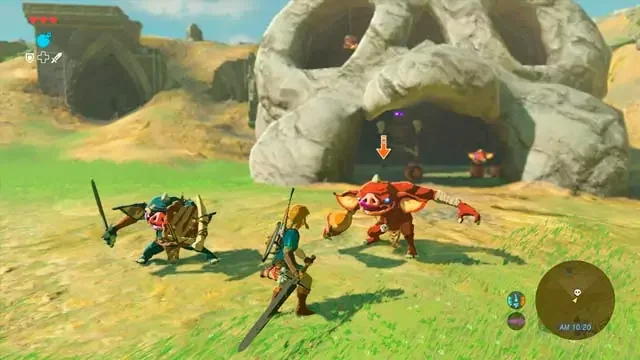
Link does not start his adventure as a war machine. Especially in the first hours, seemingly ordinary enemies can take away a frightening amount of health. Running into a more powerful creature too early can be over in a few seconds. That makes preparation matter.
A fight can be made easier by food, proper armor, good equipment or simply by deciding to watch the camp before attacking. You can also use the environment itself. Boulders can be pushed, barrels can explode and metal objects can interact with certain systems of the world.
The basic combat remains recognizable to anyone who has played Zelda before, but perfect dodges, counterattacks and creative use of the runes add a lot of depth.
It is impossible to talk about Breath of the Wild without mentioning durability. Swords, spears, bows and shields have a limited lifespan and can break during combat. At first, that bothered me. Finding a seemingly excellent weapon and losing it shortly after creates that urge to save everything for a battle that may never happen. After a few hours, my relationship with the system changed.
Weapons show up constantly, so saving every special piece stops making sense. The game wants you to swap, improvise and use whatever you have at that moment. I still do not think the system is perfect. Some weapons break too quickly and inventory management can become tiring.
But I understand what it adds to the concept. Breath of the Wild does not want the player to find a great sword in the first hours and ignore the rest of the arsenal. It forces adaptation.
Pots, stables and refuges
Food replaces a good part of the traditional recovery system. Link gathers fruit, mushrooms, meat, herbs and countless other ingredients spread across the world. Mixing them in a cooking pot produces meals that restore health or give temporary effects. There is room for experimentation.
You discover combinations little by little, learn which ingredients have certain effects and start preparing dishes before visiting more dangerous regions. Elixirs work in a similar way, using monster parts and small critters.
The system is not deeply complex, but it fits very well with the central idea of the game: exploring provides resources and those resources make Link better prepared to explore even more.
A large part of Hyrule conveys loneliness. That is why reaching a village after exploring for a long time produces a very pleasant feeling. Suddenly there are people talking, shops, houses, children, small stories and side quests.
The NPCs still carry that strange and charismatic humor typical of Nintendo. Some have routines, others offer small jobs and many simply exist to make that place convincing. The stables play a similar role along the roads.
They are resting points in the middle of long journeys, places to find information, recover resources or register horses. These spaces make Hyrule feel like a kingdom surviving the calamity instead of just a map covered in enemies.
Memories scattered across the kingdom
The main narrative is relatively simple. Calamity Ganon has taken Hyrule. Zelda is still holding out. Link wakes up after a hundred years and needs to regain his strength. But much of the emotional weight is hidden in the past. Finding memories scattered across the world lets you rebuild the relationship between Link, Zelda and the Champions before the disaster. I really like this idea because the story follows the very structure of exploration.
You do not necessarily get all the information in chronological order. You discover pieces and gradually understand who those people were. On the other hand, this structure also means players focused only on the main objectives can finish the adventure without seeing some of the best scenes. It is an inevitable consequence of putting narrative and freedom in the same space.
One of the most interesting things is that Ganon does not appear only at the end, after every box on a list has been checked. Hyrule Castle stands in front of the player from early on. The threat is right there. Technically, it is possible to ignore a gigantic amount of the game and head for the confrontation much earlier than expected. I did not want to do that. And that is where Breath of the Wild finds one of its best ideas. Preparing Link is not just about raising numbers.
Every Shrine, weapon, meal, memory and explored region makes the decision to finally walk toward the castle feel personal. You choose when you are ready.
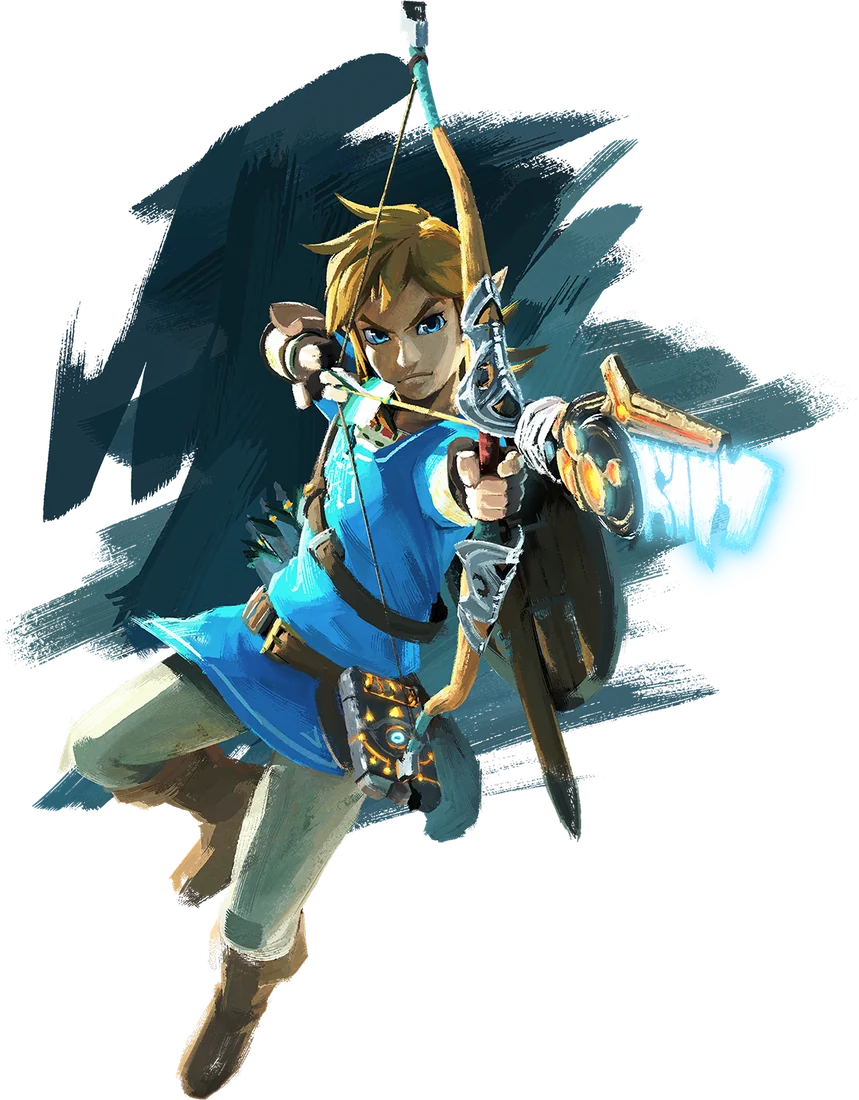
He wakes up in the Shrine of Resurrection after a hundred years, with no memories and almost nothing in his hands. Every step after that is the player’s choice.
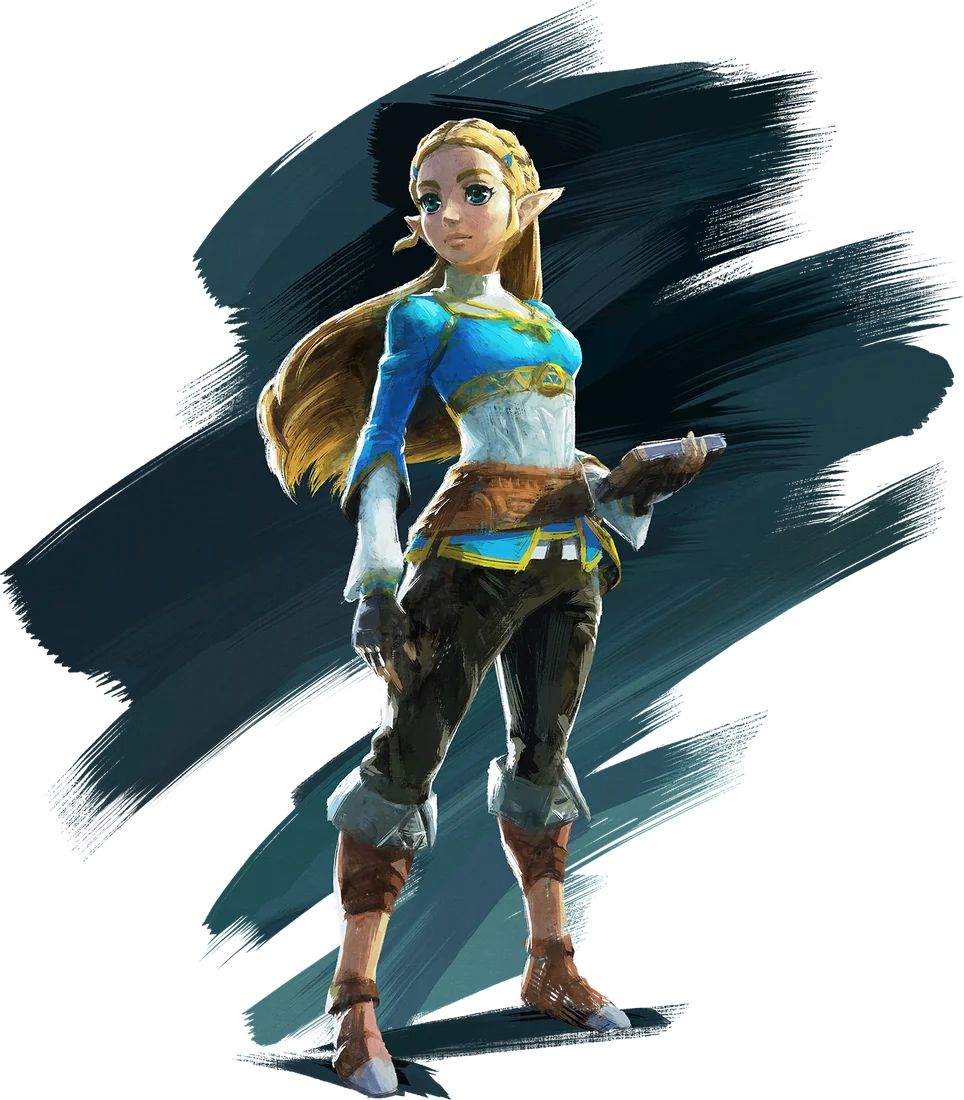
She has held out for a hundred years inside Hyrule Castle, containing Calamity Ganon. The memories scattered across the kingdom tell who she was before the disaster.
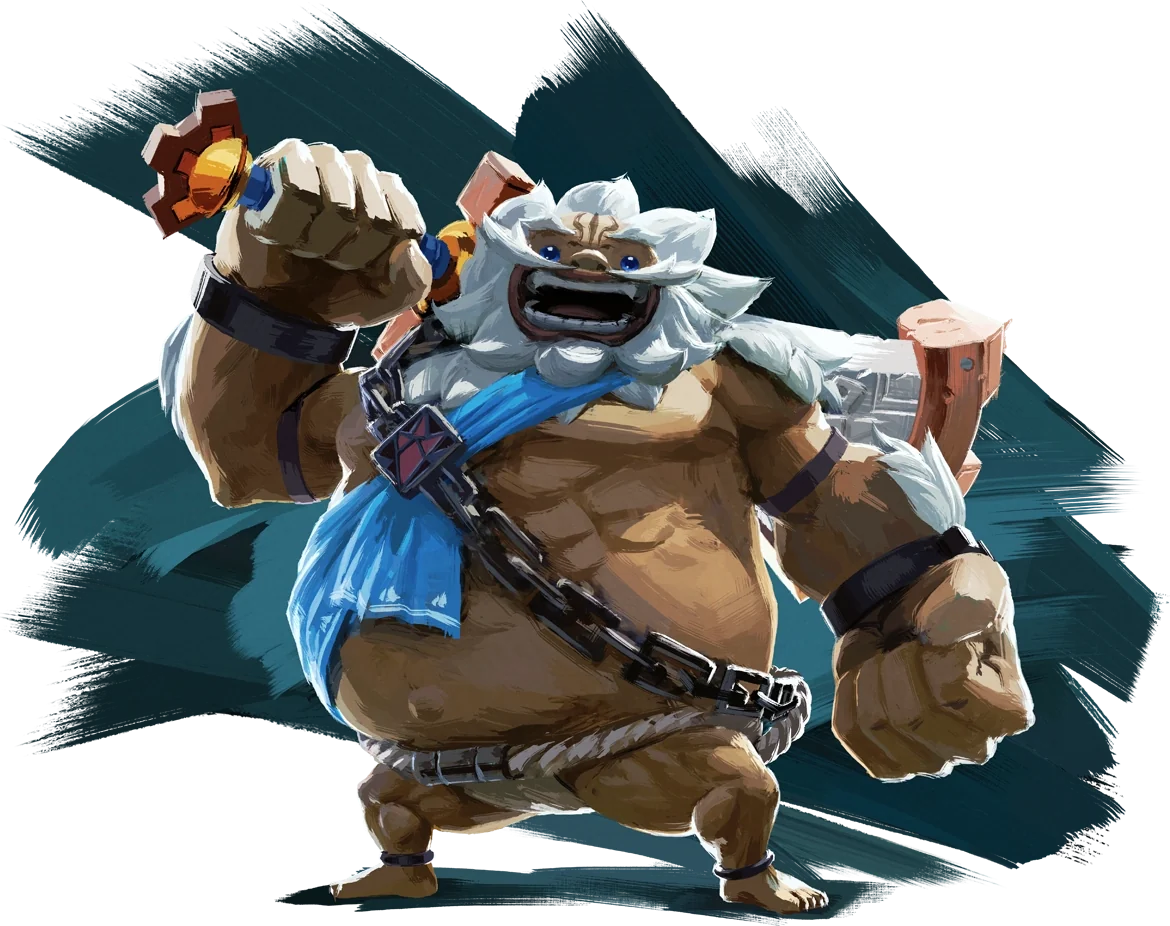
Pilot of the Divine Beast Vah Rudania, on Death Mountain. Strong, loud and generous, he protects his friends with a barrier no blow can break.
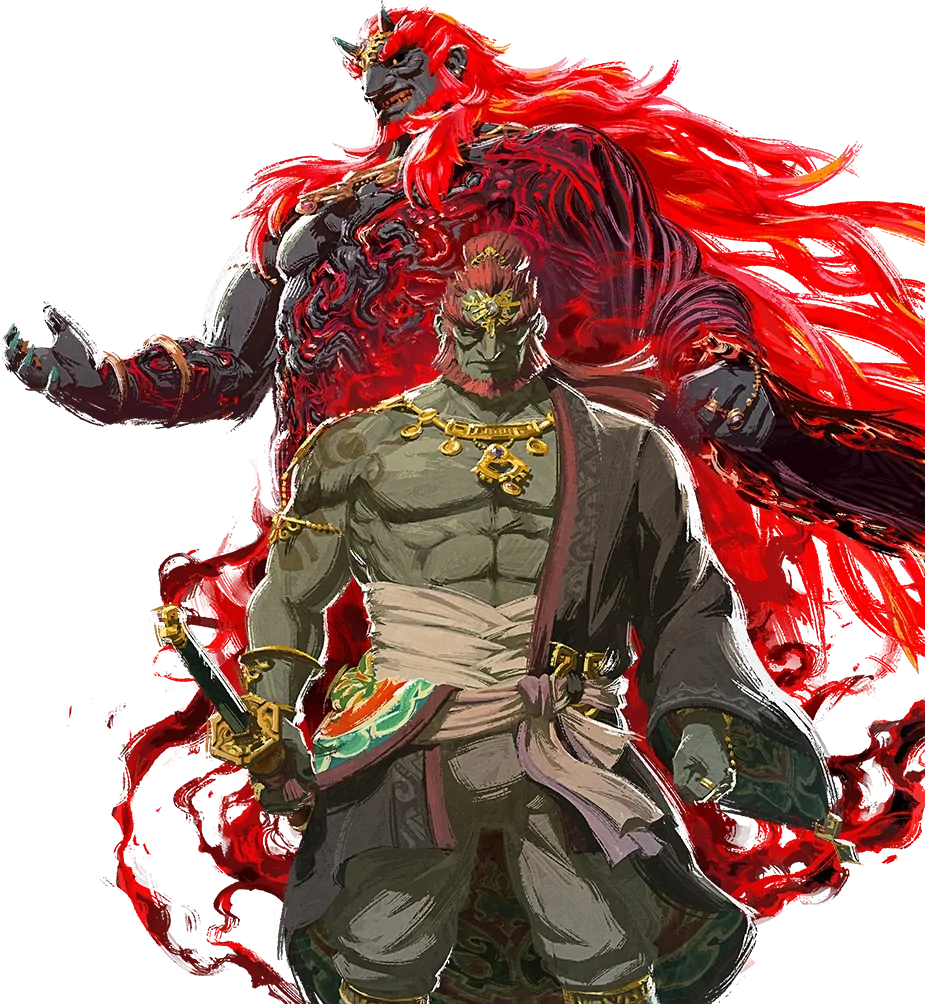
The evil that returned as Calamity Ganon and took Hyrule Castle a hundred years before Link woke up. Even from far away, the threat stays visible on the horizon for the whole adventure.
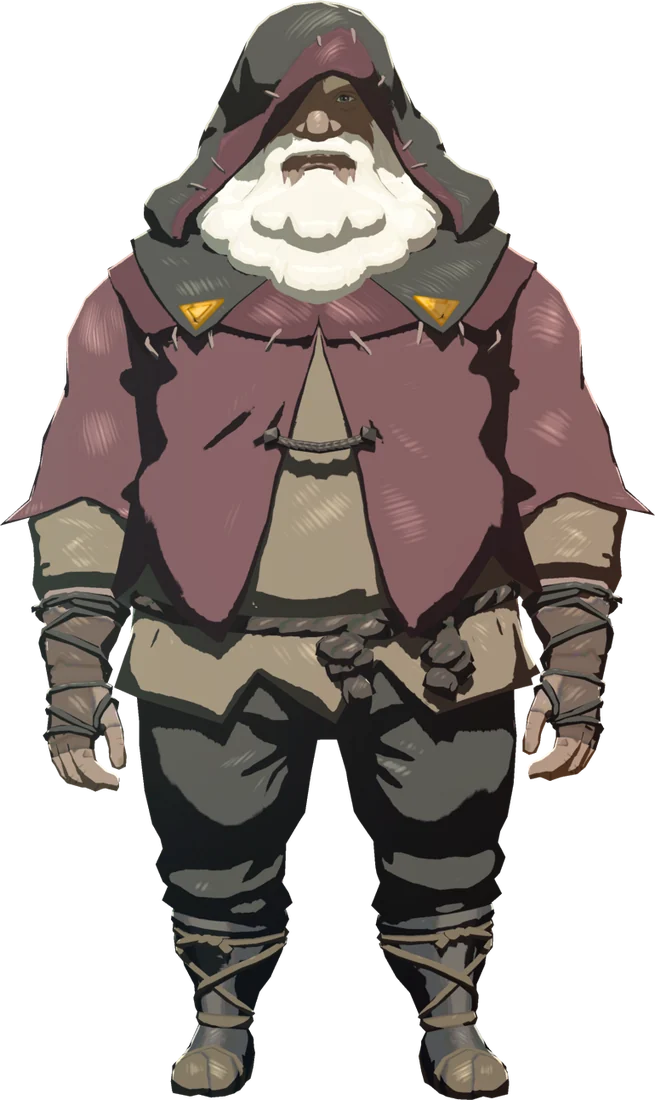
The first face Link meets after waking up. He teaches the basics of survival on the Great Plateau and keeps a secret about Hyrule’s past.
A painting that breathes
Breath of the Wild does not try to compete on realism. That was a perfect decision for the Nintendo Switch. The art direction uses soft colors, stylized characters and landscapes that often look like paintings in motion. The result stays beautiful even when you can see technical limitations. And they exist.
In TV mode, certain edges and textures make the resolution more evident. There are also performance drops in specific regions or when a lot happens at the same time. The Korok Forest is probably one of the most famous examples.
None of this got in the way of my experience, but at times it is clear that the game is demanding a lot from the hardware. On the other hand, playing something of this scale in handheld mode is still impressive.
The music is much more understated than in several earlier Zeldas. At first that may feel strange. Exploring Hyrule for minutes with only wind, animals and small piano chords creates an atmosphere quite different from the big melodies we usually associate with the series. Over time, I realized how well that decision fits the world. Breath of the Wild is often a lonely adventure. The soundtrack knows how to disappear.
And precisely because of that, when a piece of music really takes center stage, it gains much more impact.
Same game, another feeling
Switch 30 FPSSwitch 2 60 FPS| Nintendo Switch | Nintendo Switch 2 Edition | |
|---|---|---|
| Frame rate | 30 FPS | 60 FPS |
| TV resolution | 900p | 1440p |
| Handheld resolution | 720p | up to 1080p |
| HDR | No | Yes |
| Loading | Standard | Much faster |
| Save slots | 1 | 2 |
| Zelda Notes | – | Yes, in the Nintendo Switch app |
| Expansion Pass | Sold separately | Sold separately |
Review · Nintendo Switch 2There is an image of Breath of the Wild that is probably burned into a lot of people's memory. Link leaves the Shrine of Resurrection, runs toward the edge of a cliff and all of Hyrule appears in front of him. On the original Nintendo Switch, that scene was already impressive. On Switch 2, it finally happens with the clarity and smoothness that seem to match the ambition of that world. That is the best way I found to explain this edition. Do not expect a new campaign.
Do not expect new temples, a graphical rebuild or deep changes to the mechanics. Breath of the Wild Nintendo Switch 2 Edition is still the same game released in 2017. Except now the hardware no longer gets in the way.
The most important change is the frame rate. Playing Breath of the Wild at 60 FPS immediately changes how movement feels. Turning the camera, running through a forest, using the paraglider or fighting a group of enemies feels much smoother. Combat benefits too.
Dodges, parries and quick moves gain a clarity that did not exist in the same way on the previous console. It is the kind of improvement that seems merely technical until you go back to the original version. Then the difference becomes obvious.
Regions that used to push the Switch hard also stop causing that worry about performance. The adventure feels much more consistent, even when enemies, effects and physics are all happening at once. It is curious to see that a 2017 game can feel more modern simply by finally running with this much headroom.
The higher resolution is the second big difference. From the top of the towers, seeing distant mountains, forests and buildings is much more pleasant. The image is less soft and faraway elements are easier to make out.
That fits Breath of the Wild perfectly because watching the horizon has always been part of the gameplay. You climb somewhere high precisely to look for your next destination. The better you can see, the better that mechanic works.
HDR also does a lot for the art direction on compatible screens. Colors gain more presence, lighting effects stand out and moments like the Blood Moon or explosions look even more beautiful. It is not a transformation. It is an enhancement.
Review · Nintendo Switch 2There is an inevitable consequence. When the image gets much cleaner, certain textures can no longer hide their age. Rocks, vegetation and some environmental details can look quite simple up close. That did not happen with the same intensity in 2017 because the lower resolution ended up masking part of those limitations. I do not see this as a serious problem. The art direction is still strong enough to carry the whole package. But it is an important reminder that this is not a remake. Switch 2 is showing the same assets better. Including the ones that are already almost a decade old.
Fast travel and entering certain areas now happen with a much shorter wait. None of those screens was originally long enough to ruin the pacing, but Breath of the Wild is a game of dozens of hours. Saving a few seconds over and over ends up making a difference. The most important thing is the overall feeling. Everything seems to respond faster.
Opening the game, loading a save, traveling between regions and getting back to exploring all involve fewer interruptions. It is exactly the kind of improvement that does not show up well in screenshots, but becomes hard to give up after a few hours.
One of the simplest additions is also one of the most useful for veterans. There is now a second save slot. Breath of the Wild is a game where a single playthrough can hold hundreds of hours, rare items and practically a whole lifetime of exploration. Erasing that to start over never seemed like a very inviting decision. The new option solves the problem.
You can keep that old Hyrule intact and still go back to the beginning to experience the journey again. It does not sell an edition on its own. But it should have existed from the start.
The app beside Hyrule
Most of the new features beyond the technical improvements are in Zelda Notes, inside the Nintendo Switch app for smartphones. There are several different functions. Voice Memories adds new comments from Zelda tied to certain places on the map. They are small fragments of context and memory that add some presence to the character while Link explores the kingdom. Do not expect gigantic revelations. They are atmospheric extras. For those who like lore, however, there is a good reason to find them all.
Zelda Notes can also track your position and help you look for certain things. That is especially useful for anyone who decided to do what probably should require professional help: finding absolutely every Korok. It also helps locate Shrines and other points of interest. It is a very good function for completionists.
At the same time, there is something quite strange about hearing navigation instructions while crossing a fantasy kingdom. It does not ruin the experience, but it does not exactly match that feeling of natural exploration that has always been one of the game's greatest qualities.
That is why I think it is better to use the function only when I am really looking for something specific.
Other tools round out the package. You can check playthrough data, compare certain stats, edit photos and share items with other players. There are also daily bonuses that can give small advantages and a function related to amiibo. None of this radically changes Breath of the Wild. Some of these options will probably be ignored by most players. Others can be very useful for people who plan to reach 100 percent. It is a reasonable set of extras. The problem lies less in the functions and more in where they were placed.
Needing a smartphone to access these features seems like an unnecessarily complicated solution. Voice Memories could perfectly well exist inside Breath of the Wild's own interface. So could playthrough data. Navigation could be an extra map option.
I understand the idea of turning the phone into a second screen, mainly because it avoids interrupting the game to check information. But Breath of the Wild is exactly the kind of experience where I like to forget that anything exists outside Hyrule. Having a phone beeping next to me does not help much with that mission. Fortunately, Zelda Notes is optional. If you do not like the idea, you can simply ignore it.
There is one thing that keeps this edition from feeling truly complete. The additional content originally released is not automatically included just because this is the Nintendo Switch 2 Edition. Anyone who does not own the Expansion Pass yet has to buy it separately.
For an updated edition of a game released in 2017, it would be much more elegant to have all the content together. It does not make the upgrade bad. But it takes away a bit of that idea of a definitive version in terms of content. Technically, this is without a doubt the best edition. As a complete package, it could have gone a little further.
The final score
The Legend of Zelda: Breath of the Wild is one of those games whose historical importance almost gets in the way of talking about the game itself. Yes, it deeply influenced the genre. Yes, it changed the direction of Zelda. But none of that would matter so much if exploring Hyrule were not still so much fun. What stays with me the most is not the number of Shrines or kilometers of map. It is moments. Reaching the top of a mountain and spotting something strange on the horizon.
Entering a region without proper clothing and realizing too late that Link is freezing. Finding an enemy that is clearly too powerful and deciding anyway that maybe you can win. Using a rune in a way that was probably not the one originally intended. Breath of the Wild turned curiosity into a mechanic. The map does not exist to be cleared. It exists to be explored.
There are imperfections. Durability divides opinions, the Divine Beasts do not have the personality of some old temples and the Switch struggles technically at certain moments. Even so, few adventures manage to convey so much freedom without turning that freedom into emptiness.
The most interesting thing about coming back after so many years is realizing that what really made the game special still works. It is not the graphics. It is not the 60 FPS. It is looking at a distant mountain and deciding to climb it without knowing whether there is any reward up there. It is finding a Shrine by accident. It is surviving a fight that clearly started too early. It is realizing a storm has turned your metal equipment into a terrible idea.
It is throwing a weapon that is about to break at a Bokoblin's head simply because it seemed funny at that moment. The upgrade improves the way all of this is presented. But it is not the reason it is still fun.
For new players, the recommendation is extremely simple. If you own a Nintendo Switch 2, this is the version you should play. Performance is much better, the image is cleaner and loading is faster. There is no real advantage in deliberately choosing the technically inferior version.
And those who start now may have a quite different perception from the one we had in 2017. Certain ideas from Breath of the Wild were absorbed by countless games over the years. The impact of novelty cannot be recreated. But the design is still extraordinary.
That answer depends on your relationship with Hyrule. There is not enough content here to justify a whole playthrough just to see what is new. Voice Memories are interesting, but they do not transform the story. Zelda Notes offers useful features, but hardly anyone will spend another hundred hours just because of them. The reason to return is simpler. Maybe you just want to play Breath of the Wild again. In that case, there has never been a better time.
The Legend of Zelda: Breath of the Wild Nintendo Switch 2 Edition is exactly the kind of upgrade a game of this size needed. It does not try to rebuild what already worked. It solves what the previous hardware could not keep up with perfectly. 60 FPS completely change how movement and combat feel. The higher resolution makes Hyrule even more pleasant to look at. HDR enhances the art direction. Fast loading removes small interruptions.
The second save finally lets you start over without that feeling of sacrificing years of progress. Zelda Notes is more complicated. There are good ideas inside the app, mainly navigation and Voice Memories, but I would have preferred these features to be built directly into the game. The absence of the Expansion Pass from the package is also a missed opportunity.
Even so, we are talking about improvements around an experience that is still extraordinary. The original Switch showed that Breath of the Wild was possible. Switch 2 shows how it always should have run.
Nintendo SwitchBreath of the Wild had the courage to question practically every rule Zelda had established over decades and found something special on the other side. On Nintendo Switch, its technical limitations are noticeable, but never bigger than the feeling of discovering Hyrule on your own.
Nintendo Switch 2 EditionBreath of the Wild is still one of Nintendo's great milestones and its Nintendo Switch 2 Edition is the most enjoyable way to experience Hyrule today. The extras could be better integrated and the DLC should be part of the package, but technically it has never been this good to simply walk out of the Shrine of Resurrection and choose any direction.
Review by Menino Neitam
Back to top ↑